
Endurance running is an oxygen guzzling sport.
The Aerobic energy system starts becoming more and more predominant once exercise extends beyond 1 minute. This system uses fuel to produce energy in the presence of oxygen. As you pick up the pace, the demand for energy increases, therefore you need to speed up the supply of oxygen to the muscles. You as the runner will experience this as your breathing becoming more and more rapid until demand outweighs supply and you are forced to slow down. Our anaerobic (without oxygen) system does contribute, but this system is limited in how long it can go before you have lactic meltdown.
Regular endurance training causes adaptations in our heart, lungs and muscles that increase the amount of oxygen being delivered to the muscles with each heart beat. You will experience this as your heart rate being lower than previously at the same pace and you breathing being less intense. You will actually start being able to talk on runs! Then end result, being able to go faster more easily for longer.
Now that you know the importance of getting plenty of oxygen to your muscles, let's look at how the way you breathe affects this and how you can know if you are breathing optimally for maximum oxygen supply or not.
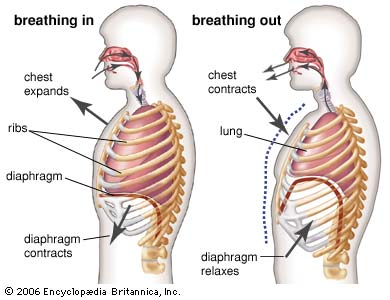
So how do you what type of a breather you are?
The most common signs you are breathing with your chest are:
- Tight wheezy sound when running hard.
- Shoulders raising when you breathe in and a lot of tension around the shoulders and chest.
- Rapid out of control, almost panicky breathing when running hard.
A simple test you can do is the following:
- Build up to a pace where you are breathing hard.
- Stop and place one hand on your stomach and one hand on your chest.
- If your top hand is moving up and out and your lower hand is moving in as you breathe in, then you are breathing with your chest.
- If your lower hand is moving out as you breathe in and the upper hand is remaining fairly still, you are breathing with your diaphragm.
How do I learn to breathe with my diaphragm?
Below I give a simple exercise to do that will help you develop your diaphragm breathing. It is very hard to think about when running hard. That is why I recommend doing the exercises below daily until the breathing pattern becomes natural. If you are already breathing with your diaphragm you can use these exercises as a breathing "strength" exercise.
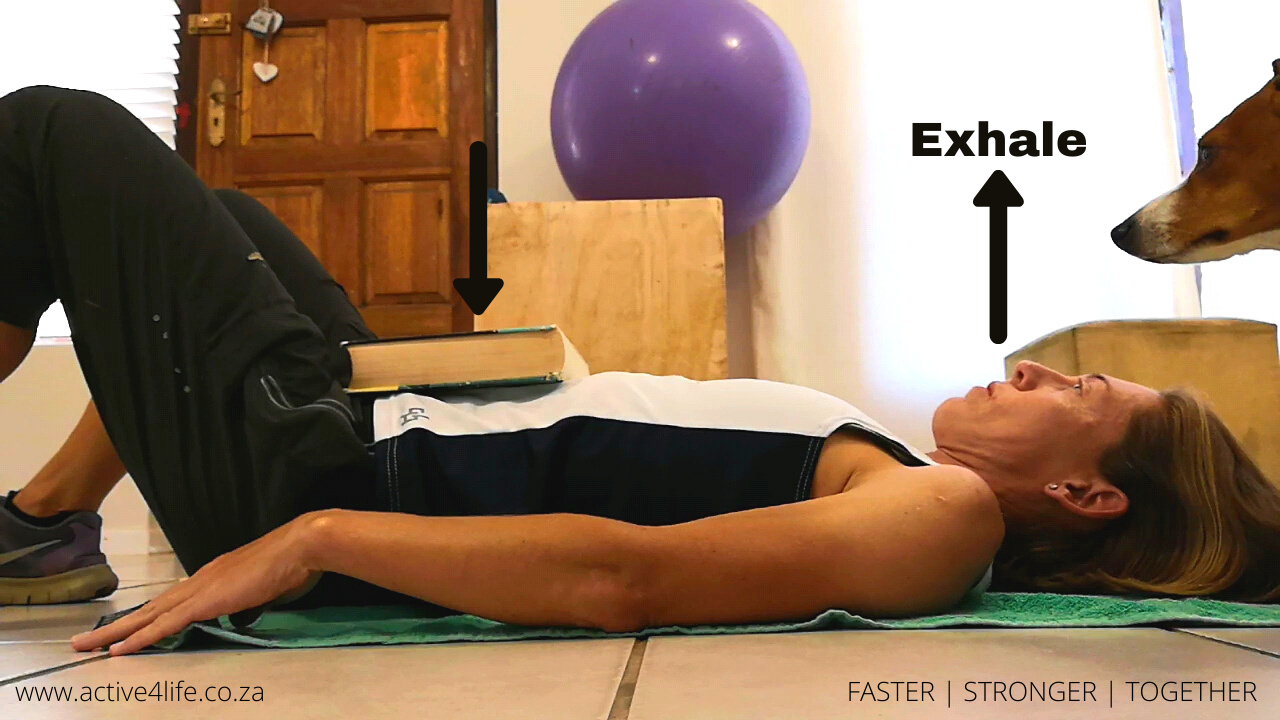
Lie on your back, knees bent and shoulders as relaxed as possible.

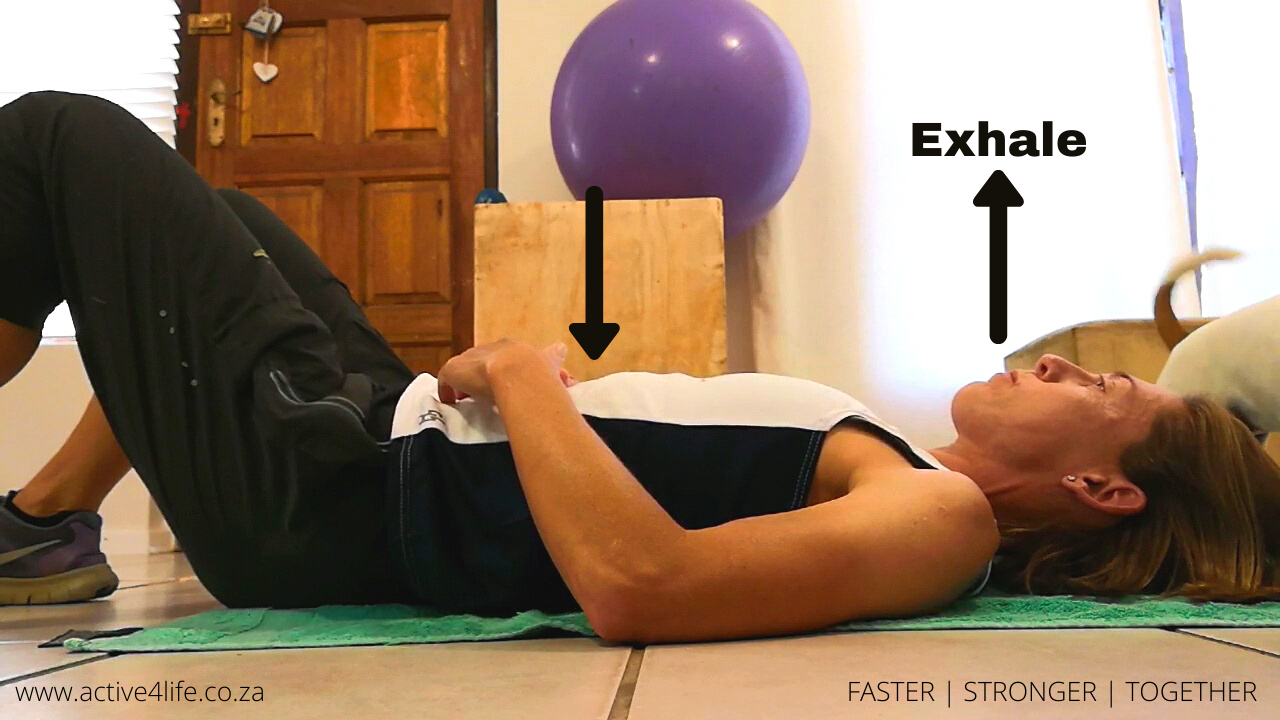
Now push the book up as high as you can and then relax.

When you are running hard and find your breathing getting out of control, focus on slowly expanding your belly (a 2 or 3 count is good) until you have a good breathing rhythm again.
Keep practicing and before you know it you will be an oxygen monster!
Onwards and upwards!
Coach Kathleen
FASTER | STRONGER | TOGETHER